
SHORT ANSWER
ETL (extract, transform, load) cleans and reshapes data on a separate server before it reaches the warehouse. ELT (extract, load, transform) loads raw data first and transforms it inside the cloud warehouse or lakehouse. ELT is the usual default on Databricks, Fabric or Snowflake because storage is cheap and compute scales. Keep an ETL step for fields that must never be stored raw.
ETL and ELT are two ways to move data from source systems into an analytics platform. The difference is where the cleaning happens. In ETL (extract, transform, load), a separate server reshapes the data before it reaches the warehouse. In ELT (extract, load, transform), raw data lands first and gets transformed inside the target platform, such as a cloud warehouse or data lakehouse.
How do ETL and ELT work?
In ETL, a tool such as SSIS or Informatica pulls the data, applies business rules in its own engine and loads only the finished result. The warehouse never sees the raw records. In ELT, an ingestion tool copies source data into a raw layer, often with change data capture. SQL or Spark jobs then transform it inside the platform, usually across the layers of a medallion architecture.
Why does the choice matter?
It decides what a change costs you. ELT keeps the full raw history. When a business rule changes, you rerun the SQL or Spark logic on stored data instead of pulling everything again from ERP or CRM. Analysts and data scientists also get the detail they need. ETL gives you tighter control over what gets stored, which helps with sensitive data. The price is that every logic change means editing and rerunning the pipeline tool.
ETL vs. ELT compared
| ETL | ELT |
|---|---|---|
Where data gets transformed | Separate ETL server | Inside warehouse or lakehouse |
Raw data kept | Usually not | Yes |
Scalability | Limited by ETL server | Scales with cloud compute |
Changing logic | Rebuild and rerun pipeline | Rerun SQL or Spark on stored data |
Sensitive data control | Filtered before storage | Needs access controls on raw layer |
Typical platforms | SSIS, Informatica, on-premises DWH | Databricks, Fabric, Snowflake, BigQuery |
Do you have to pick one?
No. Most platforms we see are hybrid. Most sources load raw, while sensitive feeds get a light step before storage, such as masking national ID numbers or dropping fields nobody uses. Make that choice per source, write it down and apply the same access rules to every layer.
Raw data only pays off if people can find it and get access safely. For a global chemical and consumer goods company, we built a portal on Azure over the company’s data lake, designed for more than 10 million files and about 30,000 new files a day. Users search data assets and request access from the data owner, and the portal logs every access and action. That request-and-approve flow is what lets you open up a raw layer without losing control.
How RUBICON helps with ETL and ELT
We move legacy ETL estates to ELT pipelines on Databricks and Azure, and we reconcile outputs so reports match before and after the switch. If that’s on your roadmap, see our data engineering services, or our architects can look at your current pipelines with you.
Related terms
Frequently asked questions
Is ELT better than ETL?
Neither wins in every case. ELT suits cloud warehouses and lakehouses because you keep the raw data and can change and rerun transformations at scale. ETL still makes sense when data must be masked or filtered before anyone stores it, when the target has little compute, or when you're keeping a legacy platform for now. Many teams run both, chosen per source.
What tools are used for ELT?
A common ELT stack pairs an ingestion tool such as Azure Data Factory, Fivetran, Airbyte or Databricks Lakeflow Connect with transformations inside the platform in SQL, Spark or dbt. Databricks Workflows, Fabric pipelines or Apache Airflow handle orchestration. Traditional ETL tools include Informatica PowerCenter and Microsoft SSIS.
Does ELT create GDPR risks?
It can, because raw personal data lands before anyone cleans it. The usual controls are tight access to the raw layer, masking or tokenising sensitive fields early, retention rules and a catalog with column-level security. If a field must never be stored in raw form, give that feed an ETL step and document why.
How long does it take to migrate from ETL to ELT?
As a typical range, a few dozen ETL jobs take two to four months to migrate, while estates with hundreds of SSIS or Informatica packages can take 6 to 12 months. Most of the effort goes into understanding undocumented business logic and reconciling outputs, not into rewriting code.
Related case study
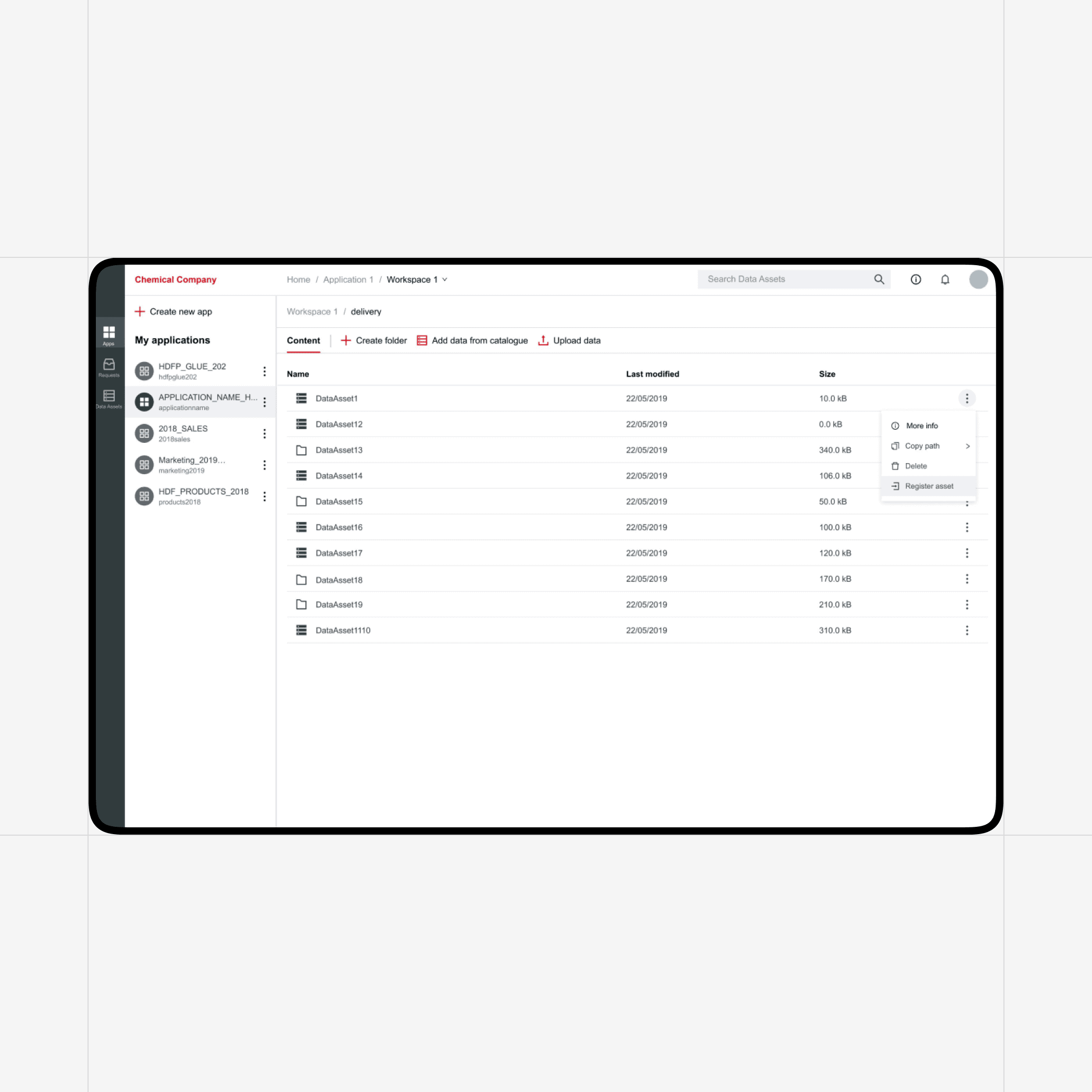
Data Lake Portal for Chemical & Consumer Goods
Digital Transformation: RUBICON Develops a Secure Cloud Native Platform for a Global Chemical & Consumer Goods Company
More resources