
SHORT ANSWER
A data contract is a machine-readable agreement between the producer of a dataset and its consumers. It defines the schema, meaning, quality rules, freshness and ownership of the data. Pipelines check the contract automatically, so a breaking change, such as a renamed or dropped column, gets caught before it reaches dashboards or models. A good first step is to cover the feeds that break most often.
A data contract is an agreement between a data producer, such as the team running your CRM or ERP system, and the teams that consume its data. It specifies the structure, meaning and quality of a dataset in a machine-readable file. Expectations become explicit and testable instead of living in people’s heads.
How does a data contract work?
The producer and the main consumers agree on the schema, business definitions, quality rules and freshness targets.
Someone writes the contract in YAML or JSON, often following the Open Data Contract Standard, and stores it in Git.
CI/CD checks proposed code changes against the contract and flags breaking changes, such as a renamed or removed column.
Pipeline tests validate each data load, and the pipeline quarantines failing records or stops the load.
Contract changes get a new version, and consumers get notice in advance.
Why does it matter for enterprises?
Most broken dashboards come from upstream changes nobody announced: a new status code, a column dropped during an ERP upgrade, a feed that silently stops. Data contracts move quality checks to the source and make ownership clear. They also underpin data products, data mesh and AI systems that need predictable, documented inputs.
Example contract elements
Element | Example |
|---|---|
Owner | Sales operations, orders data product |
Schema | order_id (string, required), order_date (date), amount_eur (decimal) |
Quality rule | amount_eur is never negative, order_id is unique |
Freshness | Updated by 06:00 CET every day |
Classification | Contains no personal data |
Versioning | Breaking changes announced 30 days ahead |
Contracts build on ownership you can see. On a data lake portal we built for a global chemical and consumer goods company, every data request went to a named data owner who approved or rejected it, and the portal kept audit logs of all access. A data contract takes that one step further: the owner also commits to the shape and quality of what they publish.
Introduce contracts gradually. Start with the source feeds that break most often or feed your most critical reports, agree contracts with those producers and add automated checks to the pipelines. Writing contracts for every table at once usually produces documents nobody maintains.
How RUBICON helps with data contracts
Our data engineering team builds governed pipelines on Databricks and Azure, with automated quality checks and catalog-based access control. If source changes keep breaking your reports, we can help you add contracts to the feeds that matter most.
Related terms
Frequently asked questions
What does a data contract contain?
A typical data contract includes the dataset name and owner, the schema with data types, business definitions for each field, quality rules such as allowed values and null limits, freshness and availability targets, security classification, versioning rules and contact details. Teams usually write it in YAML or JSON and keep it in version control next to the pipeline code.
Is there a standard format for data contracts?
The most widely used open specification is the Open Data Contract Standard (ODCS), maintained by the Bitol project under the Linux Foundation AI & Data. Many teams also use their own YAML templates. The format matters less than making contracts machine-readable, versioned and checked automatically in CI/CD and at pipeline run time.
How are data contracts enforced?
Through automated checks. Schema checks run in CI when a producer changes code, and data quality tests run in the pipeline, for example with Databricks expectations, dbt tests or Great Expectations. When a check fails, the pipeline blocks the change or quarantines the bad data and alerts the owner.
What is the difference between a data contract and a data product?
A data product is the dataset itself, run with an owner, quality targets and a lifecycle. A data contract specifies that product's interface: what consumers can rely on. One data product usually has one contract per published interface, and the contract is how the product's promises become explicit and testable.
Related case study
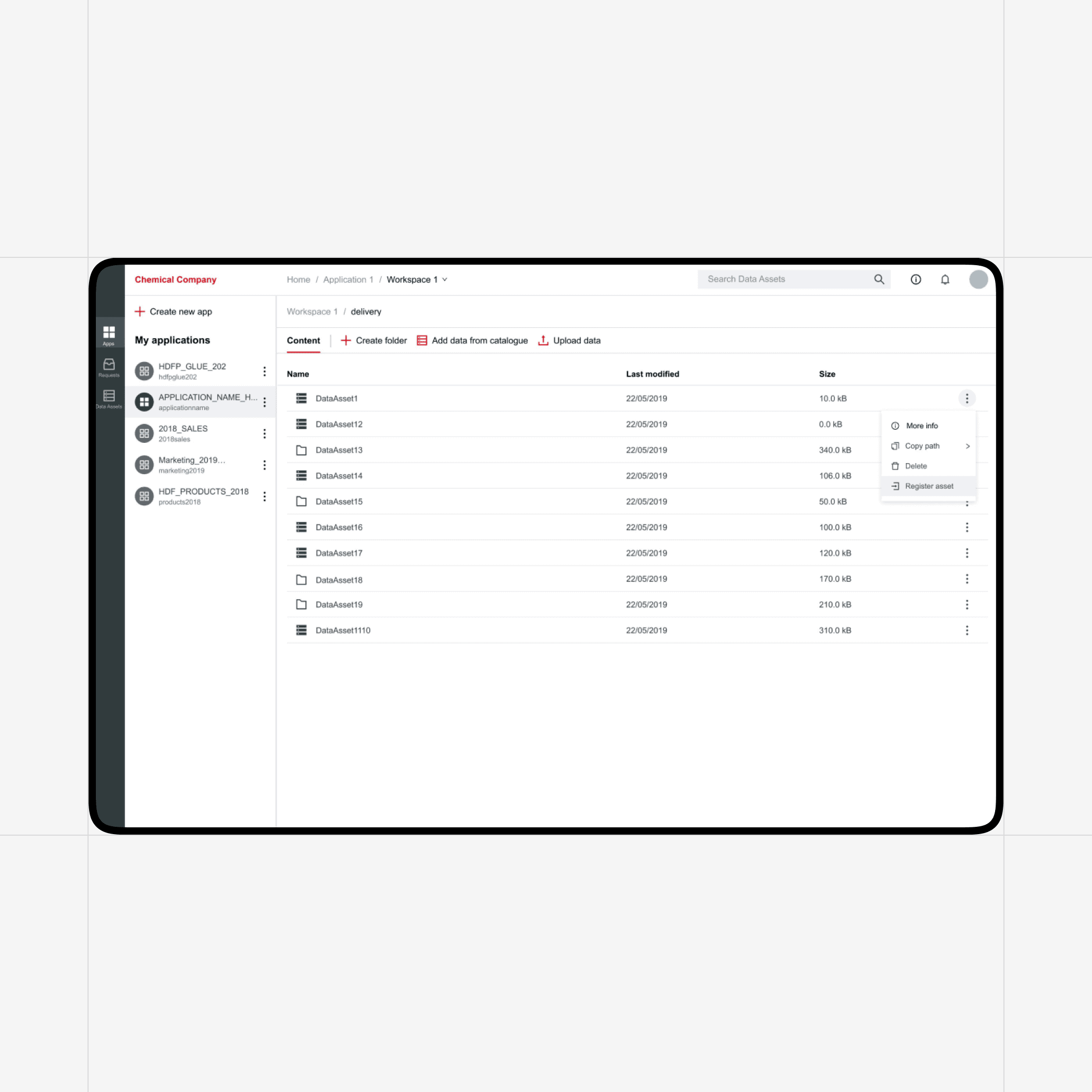
Data Lake Portal for Chemical & Consumer Goods
Digital Transformation: RUBICON Develops a Secure Cloud Native Platform for a Global Chemical & Consumer Goods Company
More resources