
SHORT ANSWER
Most AI pilots stall because they were built as demos, not as the first version of a product. The data isn't production-ready, nobody agreed a business metric, and security, evaluation and running costs were left for later. Gartner predicted in July 2024 that at least 30% of generative AI projects would be abandoned after proof of concept by the end of 2025. Stage gates with clear exit criteria prevent most stalls.
Most AI pilots stall because they were built to prove something is possible, not to become a product. The demo works on a clean sample. Production needs reliable data pipelines, access control, evaluation, monitoring, support and a business owner who wants it. The fix is to plan for production from week one and move through stage gates with clear exit criteria.
How common is the problem?
Common enough that analyst firms track it. In July 2024 Gartner predicted that at least 30% of generative AI projects would be abandoned after proof of concept by the end of 2025. It cited poor data quality, weak risk controls, rising costs and unclear business value. In June 2025 Gartner predicted that over 40% of agentic AI projects would be canceled by the end of 2027, for similar reasons.
A 2025 report from MIT’s Project NANDA, The GenAI Divide, concluded that most enterprise generative AI pilots had no measurable effect on profit and loss. The authors called it preliminary research, and people have debated its method. The exact figures matter less than the pattern: the model is rarely what blocks the way.
Why do AI pilots stall?
No agreed business metric. The pilot shows the AI can answer questions, but nobody defined how much time, cost or error it should save, so there’s no case for investment.
Data that only works in the demo. The PoC used an exported sample. Production needs live, governed, permissioned data, and nobody planned that pipeline.
Security and compliance arrive late. Information security, legal and works councils review the system after it’s built and ask for changes that force a redesign.
No evaluation. Without a golden dataset and quality thresholds, nobody can say whether the system is good enough, so the decision keeps slipping.
Unknown running costs. Nobody estimated token usage, hosting and support at production volume.
No owner. A lab team built it, but no business unit wants to run and fund it.
Underestimated plumbing. Connecting to the CRM, ERP, ticketing tool or identity provider takes longer than building the AI part.
What a proof of concept built for production looks like
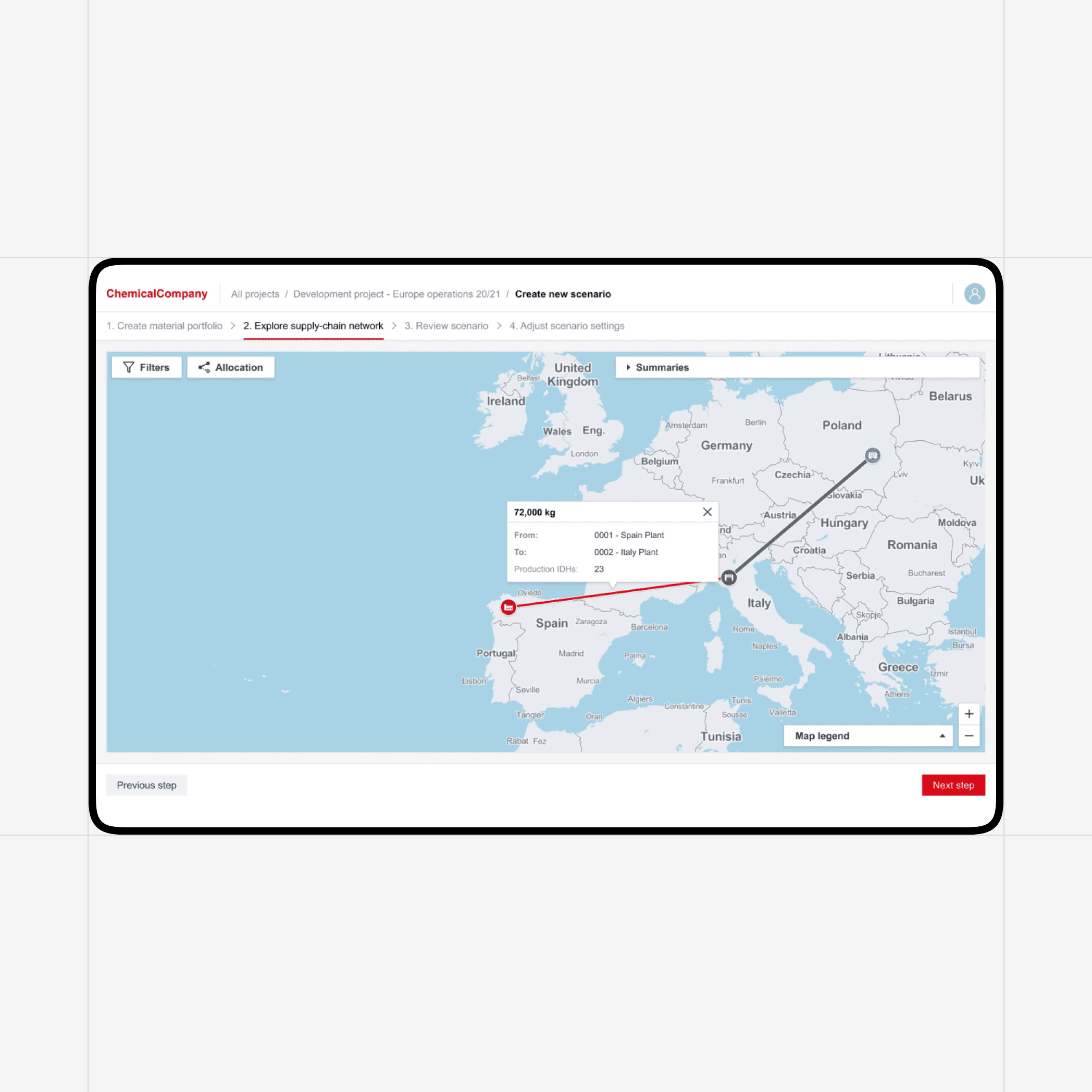
One of our own projects shows the difference. A global chemical and consumer goods company wanted to replace a costly off-the-shelf supply chain tool with a custom platform. Before writing code, we ran a three-day remote Lean Inception with their team. It ended with an agreed requirements list and a four-month window for the proof of concept.
We then built the PoC the way we’d build the product: cloud-native on Azure, with a custom authorisation system that worked with the client’s existing services, and near real-time querying over 40 million rows of supply chain network data. It shipped in three months instead of four, improved performance by 10 times or more in some cases compared with the original software, and led straight into building the first version of the application.
That project wasn’t AI, but the lesson holds. A proof of concept that already meets production constraints doesn’t need a rewrite to move on.
PoC, pilot and production: a stage-gate model
Stage | Question it answers | Typical duration | Users and data | Exit criteria to move on |
|---|---|---|---|---|
Proof of concept | Is it technically feasible on our data? | 2 to 6 weeks | Project team, representative data sample | Quality on a first golden dataset meets an agreed bar, production data sources identified, rough running cost estimated |
Pilot | Does it create value in real work? | 4 to 8 weeks | 10 to 50 real users, live data, basic access control | Business metric improved against baseline, security review passed, business owner and budget confirmed |
Production | Can it run reliably at scale? | 2 to 4 months to launch | All target users, connected systems | Evaluation in CI, monitoring and alerts, support process, documentation, cost within budget |
Scale and improve | Where else does it pay off? | Ongoing | New teams, tools and data sources | Regular quality and cost reviews, roadmap based on usage data |
Each gate is a decision meeting with the business owner, IT, security and the delivery team. The options are go, change or stop. Stopping at a gate means the process worked.
How do you plan for production from week one?
Pick a use case with a measurable outcome. For example, minutes saved per support ticket or share of documents processed without manual review. Measure the baseline before you start. Our AI readiness assessment checklist helps you choose.
Use production data sources from the start, even if the PoC reads only a subset. This exposes data access, quality and permission problems early.
Build the golden dataset in the PoC. A set of real questions or cases with expected outcomes lets you prove quality at every gate. See our LLM evaluation guide.
Involve security and compliance at the start. Share the architecture, data flows and model providers in week one, not after the demo.
Estimate running costs at target volume. Multiply expected requests by token usage and add hosting, monitoring and support.
Design for your identity and permission model. Users should only get answers based on data they’re allowed to see.
Name a business owner who owns the metric, the budget and the rollout.
Which costs appear after the pilot?
Data pipelines and connectors to production systems.
Access control, audit logging and private networking.
Evaluation and monitoring tooling, plus the time to review results.
Model usage at full volume, which can be many times the pilot’s usage.
User training, change management and a support process.
Ongoing maintenance as source systems, models and regulations change.
For typical budgets per phase, see how much an AI agent project costs. Check regulated use cases against the EU AI Act as well. This guide is general information, not legal advice.
Warning signs that a pilot is stalling
The pilot has been extended more than once without new exit criteria.
Users stopped using it after the first weeks, and nobody knows why.
People discuss quality through anecdotes rather than scores.
Nobody can state the monthly running cost at full rollout.
The security review hasn’t started.
How RUBICON helps take AI from pilot to production
We help you agree scope and metrics before building, often in a Lean Inception workshop, then build the pilot on production data, identity and evaluation from the start. Since 2013 we’ve launched 60+ products for clients across Europe and North America. RUBICON is ISO 27001:2022 and ISO 9001:2015 certified, a Microsoft Solutions Partner for Cloud & AI Platforms and a Databricks Partner. See our AI and machine learning solutions.
If you have a pilot that’s stuck, our architects can review it against production criteria with you.
Frequently asked questions
What is the difference between an AI proof of concept and a pilot?
A proof of concept answers whether something is technically possible, usually on a data sample with no real users, in two to six weeks. A pilot answers whether it creates value in real work: real users, real data, basic security and a measured business outcome, typically over four to eight weeks. Production adds scale, connections to other systems, support and governance.
What percentage of AI projects fail to reach production?
Figures vary by study and definition. Gartner predicted in July 2024 that at least 30% of generative AI projects would be abandoned after proof of concept by the end of 2025, and in June 2025 predicted that over 40% of agentic AI projects would be canceled by the end of 2027. Treat these numbers as signals of common risk, not precise measurements.
How long does it take to move an AI pilot into production?
For a focused use case with prepared data, moving from a successful pilot to production typically takes two to four months. The time goes into connecting systems, access control, evaluation, monitoring, user training and support processes. It takes longer when data pipelines or identity and permission models have to be built first.
When should we stop an AI pilot?
Stop or rethink it when the pilot misses its agreed business metric after a fair test, when the data needed for production can't be made available, when running costs exceed the value created, or when no business owner will take responsibility. Stopping early costs less than keeping a pilot alive with no route to production.
Related case study
Real Time Operations Analytics: A Proof of Concept
RUBICON Develops a Proof of Concept (POC) for a Custom Real-Time Operation Analytics Supply Chain Management (SCM) Platform
More resources