
SHORT ANSWER
Choose fixed price when the scope is small and fully defined, time and materials when requirements will change, and a dedicated team when you're building a product for 12 months or more. Fixed price moves estimation risk to the vendor, who prices it in. Time and materials trades budget certainty for flexibility. A dedicated team gives a predictable monthly cost and the most control.
You’ve found a partner you like, and now the contract question comes up. The engagement model decides who carries the risk, how much control you keep and how predictable your budget is. Pick the wrong one and a good team ends up arguing about scope instead of shipping. Here’s how the three models compare, and when each one is the right call.
How do the three models compare?
| Fixed price | Time and materials | Dedicated team |
|---|---|---|---|
Best for | Small, fully defined scope | Changing requirements | Long-term product development |
Budget certainty | High | Medium | High (monthly) |
Flexibility to change scope | Low | High | High |
Who carries estimation risk | Vendor | Client | Shared |
Your control over priorities | Low | High | Highest |
Typical duration | Weeks to a few months | Months | 6 months to years |
Hidden cost risk | Change requests | Scope creep | Low if well managed |
When does fixed price work?
You agree on scope, timeline and price upfront. It works for a discovery phase, a design sprint, a proof of concept or a clearly specified MVP.
Pros: a known budget, a clear deliverable and less management effort for you.
Cons: a risk buffer built into the price, little room to change direction, and regular debates about what was in scope.
Use it when: you can write down what done looks like and it’s unlikely to change.
When does time and materials work?
You pay for the hours worked, usually reported per sprint. The backlog changes as you learn from users and stakeholders.
Pros: full flexibility, no risk buffer, and you only pay for work actually done.
Cons: the final cost is less predictable, and you need someone on your side to set priorities every sprint.
Use it when: you’re building something new and expect requirements to shift.
When does a dedicated team work?
A stable group of engineers works only on your product, billed monthly. The team learns your domain and codebase, so it gets faster over time.
Pros: a predictable monthly cost, the most control, knowledge that stays with the team, and easy scaling.
Cons: you need a continuous roadmap, and it’s poor value for one-off projects.
Use it when: the product will be developed and maintained for a year or more.
Why good engagements start with a short discovery
When a European HR software company came back to us with a new product idea, a cloud platform for psychometric candidate assessment, nobody tried to price the whole build on day one. We started with Lean Inception and Design Sprint workshops in our Sarajevo office. Together we set the product vision, mapped features and user journeys, and checked the technical, business and UX pieces.
Only then did the work move into two-week sprints. The result was a platform where HR professionals create job openings, choose an assessment plan and send tests to candidates. The workshops turned an open idea into a backlog both sides could plan against. That’s the right moment to choose between time and materials and a dedicated team, not before.
How do you avoid the hidden costs of each model?
Every model has a typical failure, and each one has a cheap fix if you plan for it upfront.
Fixed price and change requests. Write acceptance criteria for every deliverable, and agree on a change budget of a fixed size before work starts. Then small changes don’t need a new negotiation each time.
Time and materials and scope creep. Agree on a monthly budget ceiling and review burn against the roadmap every sprint. If the backlog grows faster than the team ships, cut scope early rather than extend the timeline quietly.
Dedicated team and drift. A team without a clear roadmap fills its time with low-value work. Hold a quarterly planning session where you confirm team size against the next three months of work, and shrink the team if the work isn’t there.
The model matters less than how honestly both sides report progress. Ask a partner to show you a real sprint report from another project before you sign.
How do you decide?
Is the scope small and fully defined? Choose fixed price.
Is it a new product with open questions? Start with a fixed-price discovery, then move to time and materials.
Is it a long-running product with a roadmap? Choose a dedicated team.
Do you need to extend your own team? Choose a dedicated team that works inside your processes and tools.
If you can’t answer these questions yet, you need a discovery phase first. Two or three weeks of shared work tells you more about scope than any proposal document.
What does each model cost in practice?
Rates and budgets vary by engagement, so we don’t publish a price list. What you can compare is effort. A fixed-price discovery phase typically takes 2 to 4 people for 1 to 3 weeks. A time and materials MVP typically needs 3 to 5 people for 3 to 5 months. A dedicated team usually runs with three to eight engineers, billed monthly. Multiply team size by duration by your partner’s rate for a first estimate. See how much custom software development costs in Europe for the full breakdown, and our guide to nearshore software development in Bosnia and Herzegovina for typical team setups by role.
How RUBICON helps with choosing an engagement model
We offer all three models and don’t push one. Most engagements start with a short discovery so both sides understand the scope, then continue as end-to-end product development or a dedicated team. For advisory work we offer consulting services.
We’re about 55 people, 40+ of them engineers, and 70% of new clients reach us through referrals. After a short discovery we scope the work and give you a direct quote for the model that fits. If you’re weighing models for a specific project, our delivery leads can talk it through with you.
Frequently asked questions
Is fixed price cheaper than time and materials?
Not usually. Vendors typically add a risk buffer to fixed-price quotes to cover estimation risk, and scope changes come back as change requests. Fixed price buys you budget certainty for a defined scope, not a lower price. If you expect the scope to move, time and materials usually costs less overall, because you pay only for the work done.
Can we switch engagement models during a project?
Yes, and it's common. Many projects start with a fixed-price discovery phase, move to time and materials for the first release, then continue as a dedicated team once the product is live. Agree upfront how the switch works, so the team and the knowledge carry over without a gap.
How big should a dedicated team be?
Most dedicated teams start with three to five people, for example a tech lead, two or three engineers and a QA engineer. They grow as the roadmap expands. Designers, DevOps and data engineers often join part time. Starting small and adding people once the backlog is clear keeps the monthly cost honest.
Who manages a dedicated team?
You set priorities, usually through a product owner on your side. The partner handles people management, hiring, replacements and engineering practices, and often provides a delivery manager or tech lead. The split works when your product owner has time for weekly planning and quick answers during the sprint.
Related case study
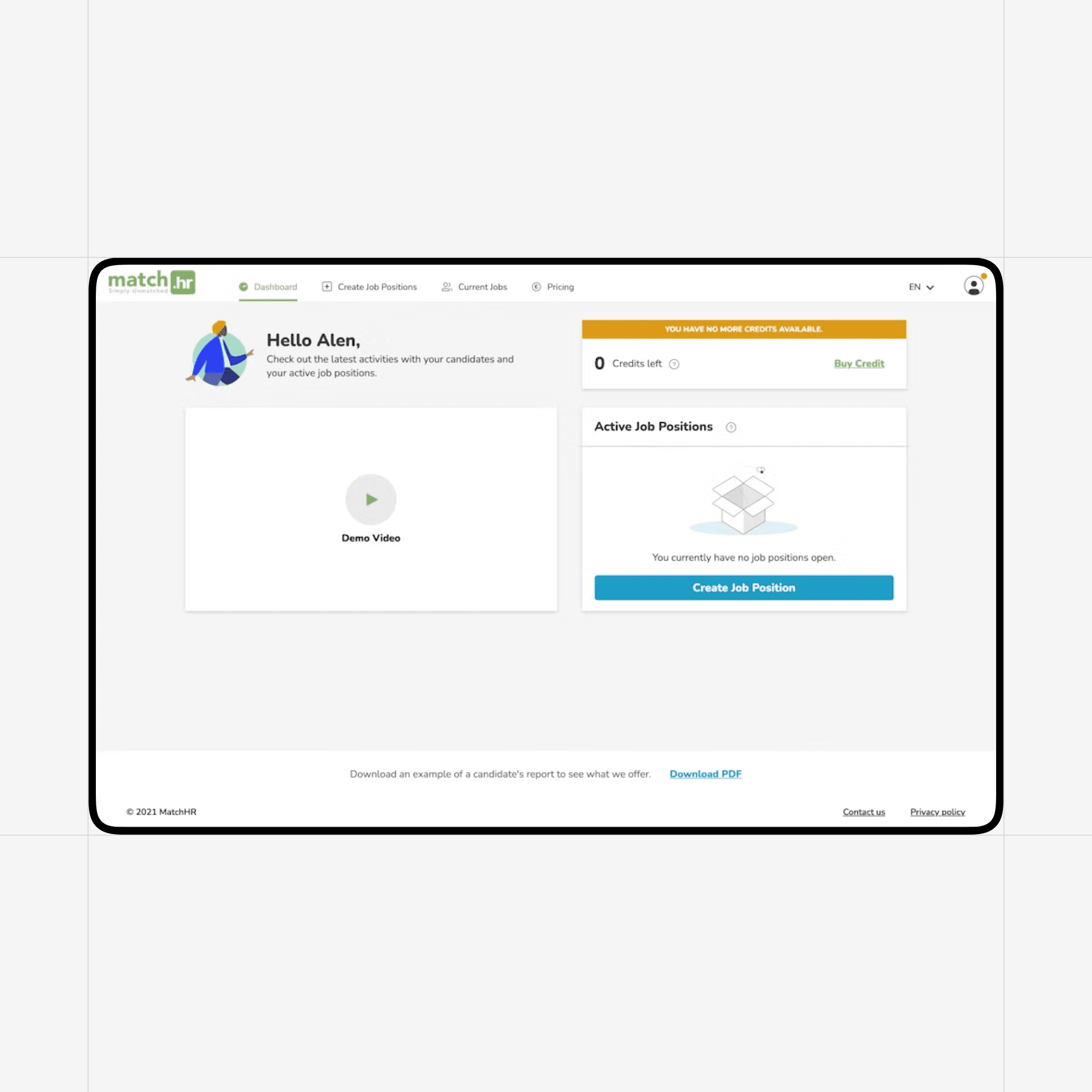
MatchHR: Transforming HR Assessments | Case Study
In partnership with Making Moves B.V., RUBICON developed a cloud assessment platform that covers the gap between psychometric profiling and hiring
More resources